The skinny
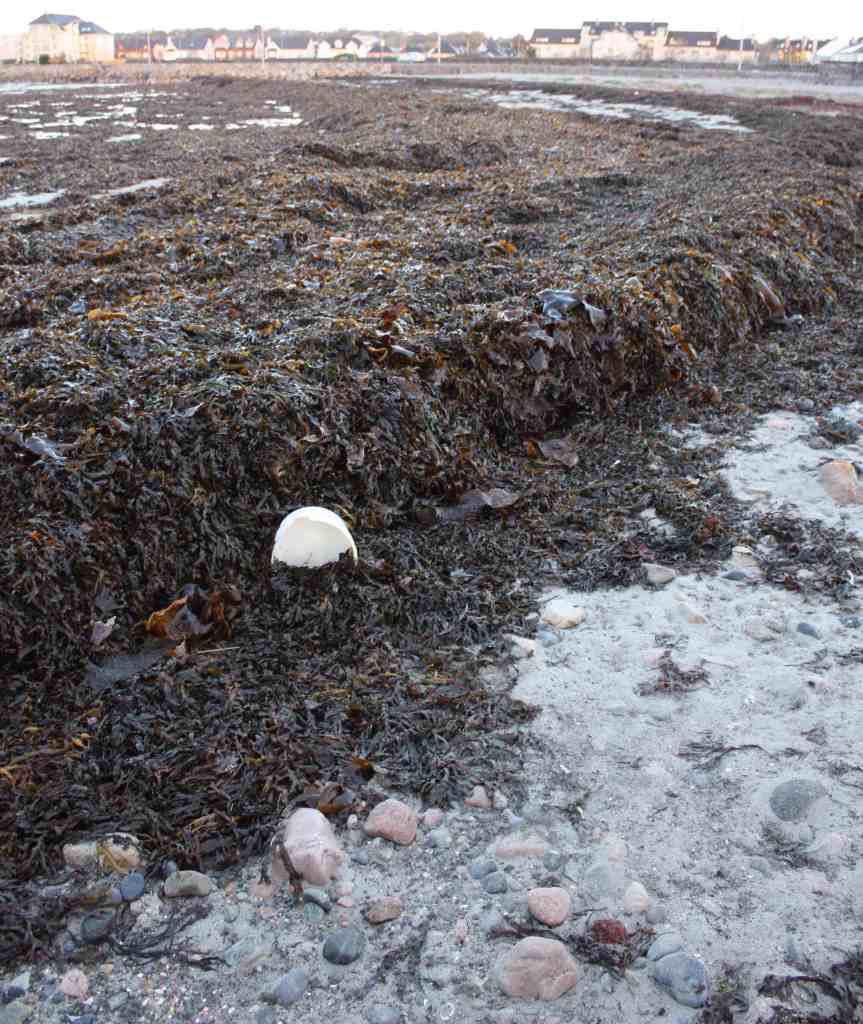
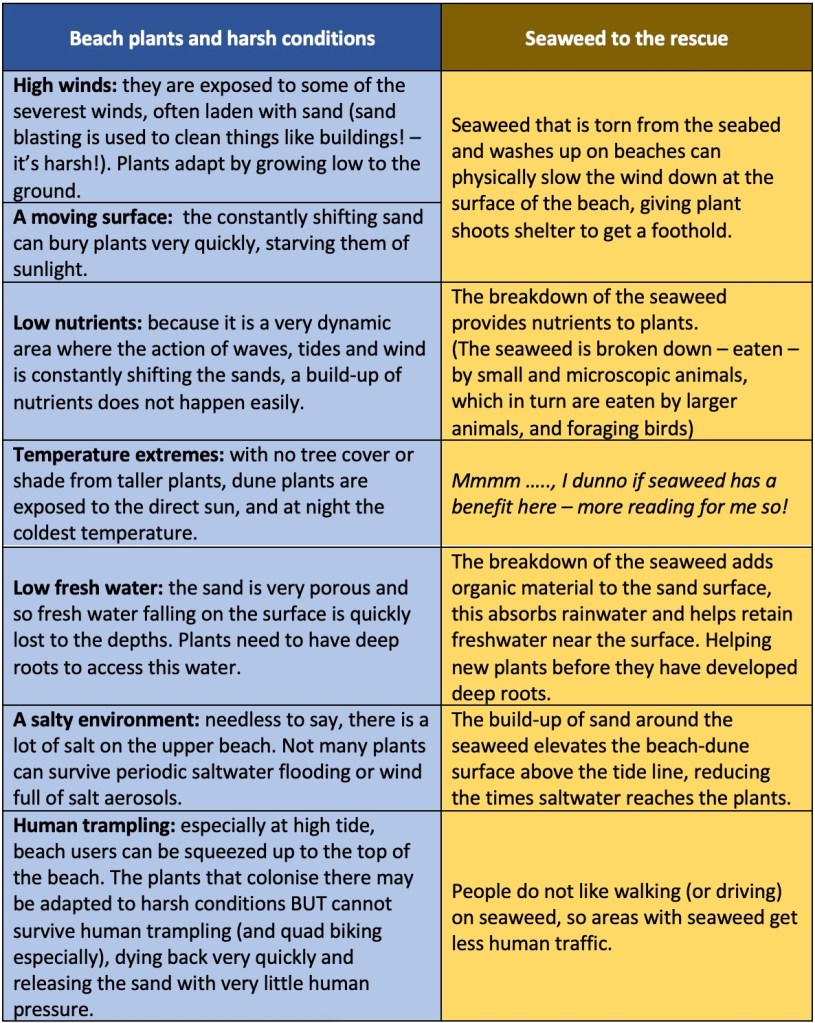
For dune plants, seaweed is a source of nutrients, water, shelter from wind and trampling. It traps sand, building new dunes, and supports biodiversity. Dunes are a natural coastal protection.
Tough plants
The upper beach and seaward facing dunes are tough places for plants to survive. And plants are the key to stabilising dunes, holding the sand in place. Healthy beaches and dune are a natural buffer against coastal erosion and flooding, a nature-based solution to climate change impacts.
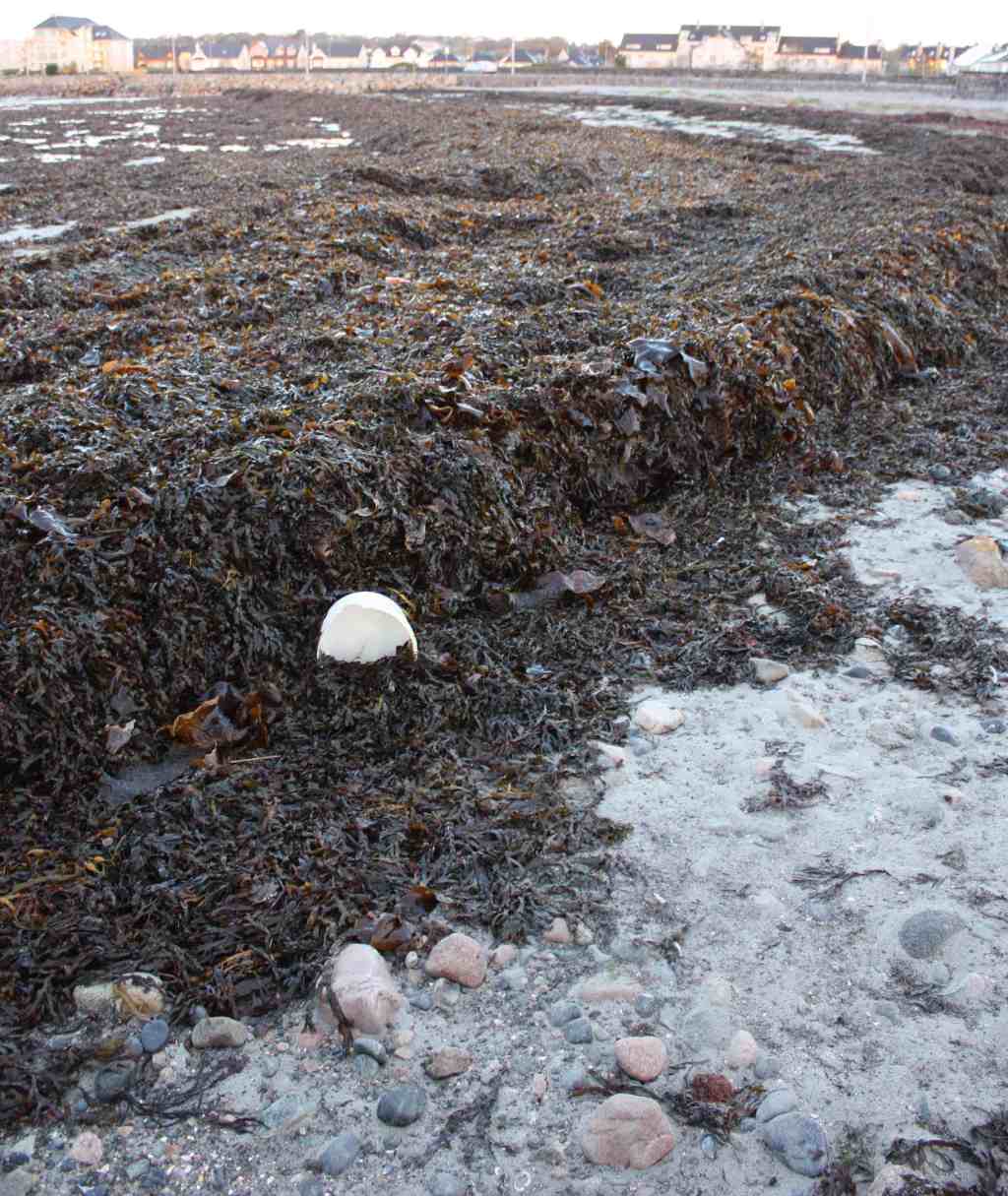
Where seaweed washes up in large quantities on beaches that are heavily used, usually after winter and spring storms, there is often pressure on management to remove it due to bad smell, aesthetics and the space it takes up.
Management options for washed-up seaweed:
Management Option 1 – Removing seaweed completely will
- Be costly
- Result in the benefits described above being lost
- Prevent the beach and dunes (if present) recovering naturally – contributing to erosion at the site
- Remove sand too – also contributing to erosion at the site
- Severely damage habitat quality and biodiversity

This approach is a humans-first, short-term action, going against our global battle against climate change impacts and biodiversity loss.
Management Option 2 – Leaving the seaweed completely untouched may
- result in the benefits described above, enhancing the coastal protection and habitat quality
- reduce use of the beach due to reduced user access and mobility, aesthetics and smell
- be perceived as a lack of management (and may be a lack of management!), so signage should explain the reasons for leaving it describing the benefits.
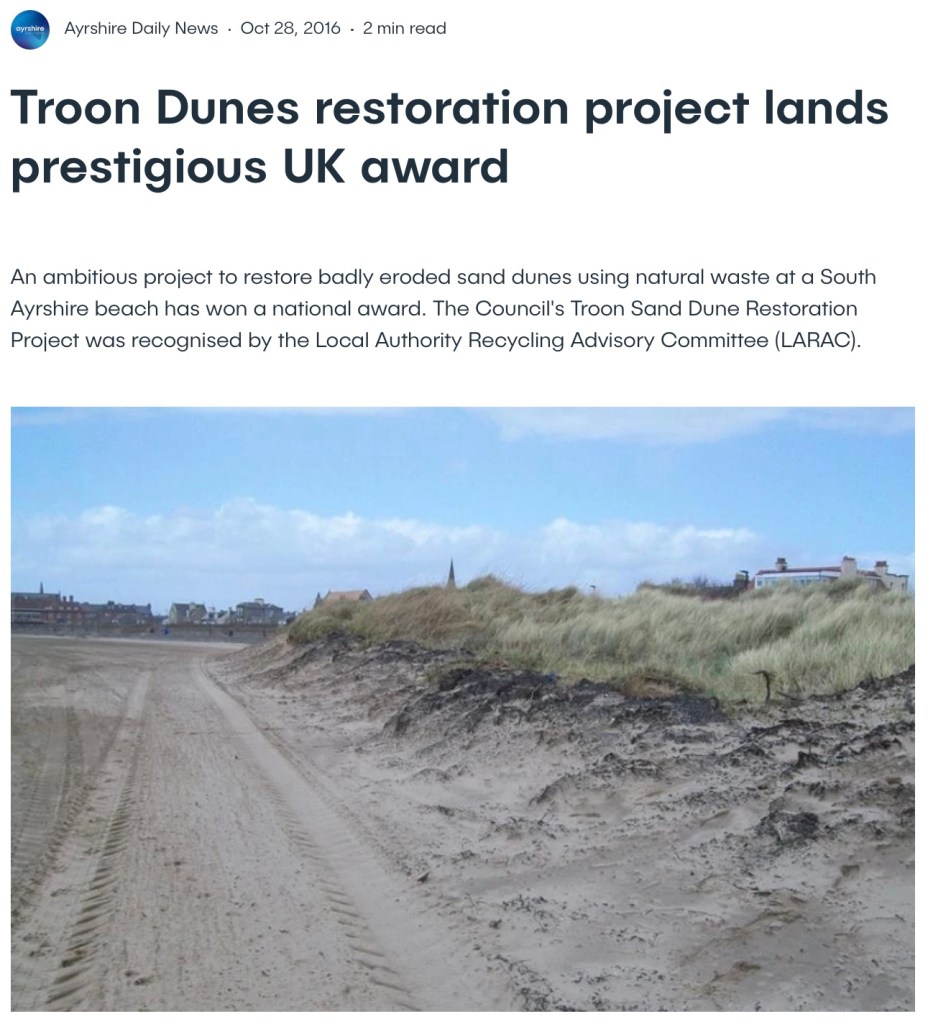
Available at: https://www.ayrshiredailynews.co.uk/news/troon-dunes-restoration-project-lands-prestigious-uk-award
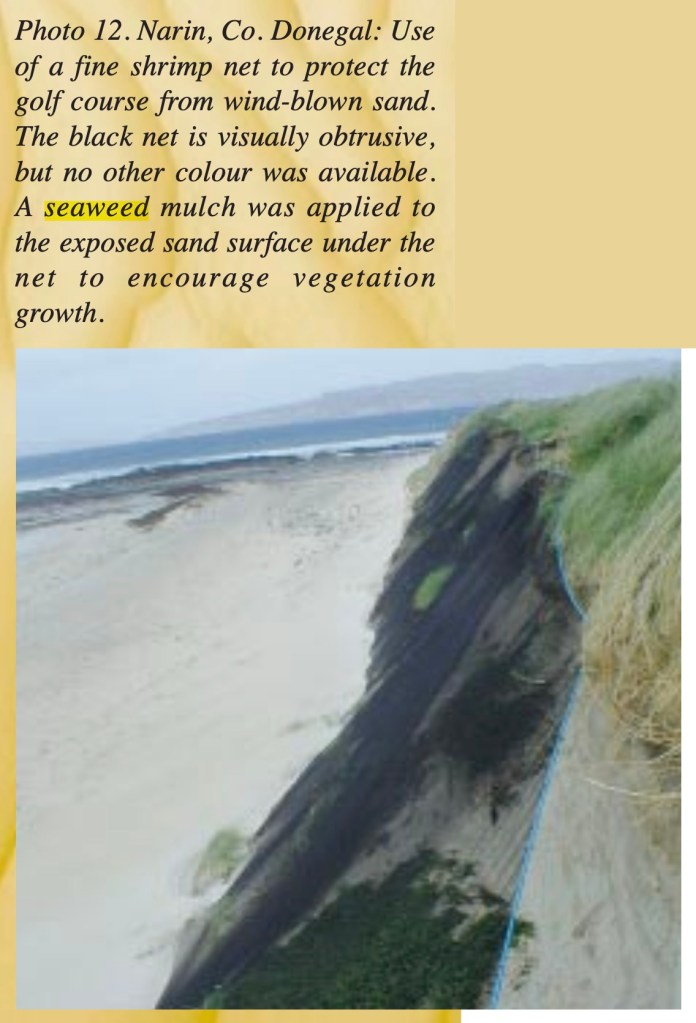
Some other thoughts
- The “seaweed nuisance” (when it is rotting and decaying) generally lasts only a number of weeks long, and this is normally not during the busy summer period
- Dunes are by their nature low nutrient places where the unique plants and animals that are valued the world over live, we do not want to over-use the seaweed spreading technique as it will promote non-dune grasses and species which would take over and lower biodiversity and habitat value.
- Not alone does seaweed provide nutrients and trap sand, it often traps seeds and can carry in small root fragments when washed up, that regenerate dune plants.
 Kevin's Dunes Blog
Leave a comment